A failed window seal occurs when the airtight barrier inside a double-pane or triple-pane insulated glass unit (IGU) breaks down, allowing moisture and outside air to enter the space between the panes. The industry term for this is “IGU seal failure,” and it affects both the thermal performance and visual clarity of your windows. For Vaughan homeowners dealing with cold Ontario winters and humid summers, a broken window seal is more than a cosmetic problem. It drives up heating costs, invites mold, and can accelerate structural damage to your window frames if left unaddressed.
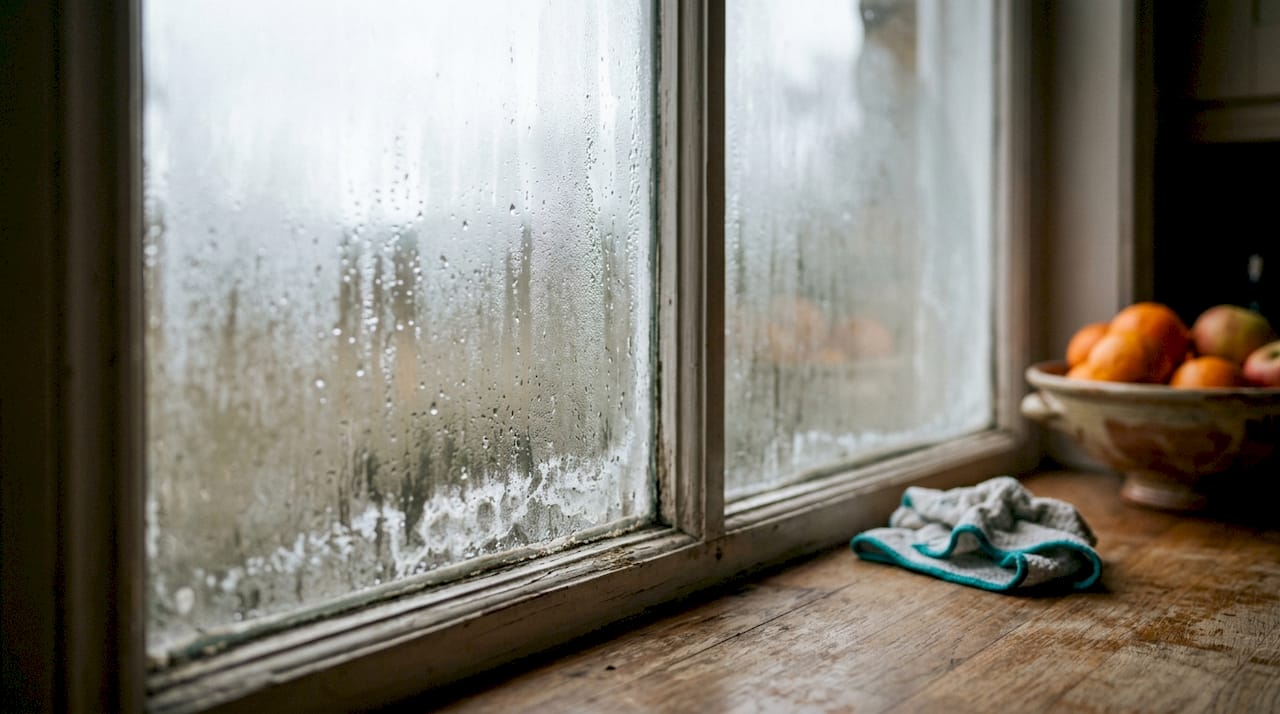
The clearest sign of IGU seal failure is fogging between panes that stays put regardless of indoor humidity or outdoor temperature. Unlike surface condensation, which forms on the glass face and wipes away, moisture trapped inside the IGU cannot be removed by cleaning. That distinction matters because many homeowners spend time scrubbing a window that simply cannot be cleaned from the outside.
Three warning signs point directly to a window seal problem:
Not every window problem is a seal problem. Frame warping, flashing gaps, and poor original installation can all mimic the symptoms of seal failure. A draft near the sill, for example, might trace back to a failed weatherstrip rather than a compromised IGU. Knowing the difference saves you from paying for the wrong repair.
Pro Tip: Use a simple field test to confirm IGU failure. Place your hand on the interior glass surface. If the glass feels noticeably colder than the room air even with the heat running, insulating gas has escaped and the seal is gone.
Thermal cycling is one of the leading causes of seal breakdown. Vaughan’s climate swings from below-freezing winters to hot, humid summers, and that repeated expansion and contraction stresses the seal materials over time. UV exposure and physical impact accelerate the process. Windows installed without proper glazing tape or setting blocks fail earlier because uneven pressure concentrates stress at weak points in the seal perimeter.
The most important thing to understand about repairing a failed window seal is that the IGU itself cannot be resealed once its hermetic barrier breaks. Replacing the entire IGU is the only repair that restores thermal performance. Caulking the outside frame or applying perimeter sealant addresses cosmetic gaps and minor air infiltration, but it does not replace the inert gas (argon or krypton) lost from inside the unit.
Here is a realistic breakdown of what repairs cost:
| Repair type | Typical cost range | What it fixes |
|---|---|---|
| Re-caulking or perimeter sealant | $100–$300 | Minor frame gaps, cosmetic air leaks |
| Flashing repair | $200–$600 | Water intrusion from roof or frame junction |
| IGU replacement (glass unit only) | $300–$800 | Seal failure when frame is structurally sound |
| Full window replacement | $1,500+ per window | Frame damage, old windows, or repeated failure |
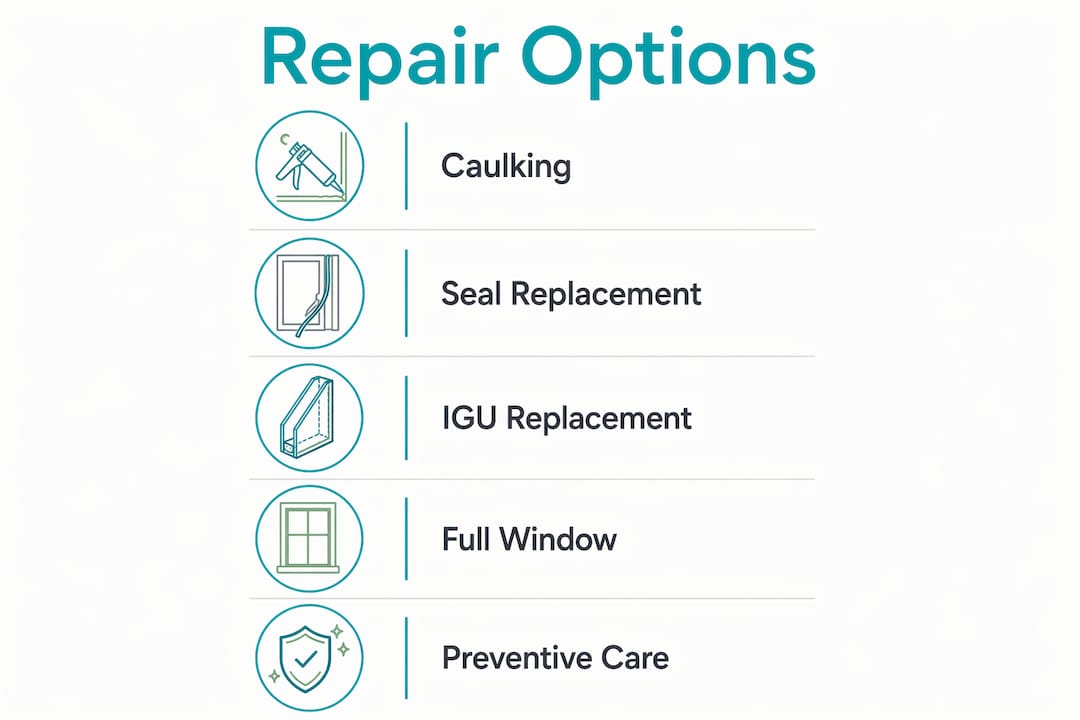
Repair costs for broken seals range from $70 to $245 for basic fixes, while full IGU or window replacement climbs significantly higher. The gap between those numbers reflects the difference between cosmetic work and genuine performance restoration.
Replacing just the IGU is the most cost-effective path when the frame is structurally sound and the damage is limited to the glass unit and its seal. A glazing professional removes the failed unit, installs a new factory-sealed IGU, and the existing frame stays in place. This approach costs far less than a full window replacement and delivers the same thermal performance as a new window.
Pro Tip: Avoid DIY defogging kits sold online. These kits drill small holes in the glass to remove moisture temporarily, but they do not restore the insulating gas or reseal the unit. The fog returns, and the window’s energy performance stays compromised.
Storm-driven rain frequently exposes pre-existing flashing or caulking weaknesses. If your window leaks only during heavy rain, the problem is likely flashing rather than IGU failure. Patch repairs in that scenario buy time but rarely solve the underlying issue permanently.
IGU replacement works well when the frame is in good shape. Replacement of the entire window assembly becomes the better call when the frame itself is compromised. Vaughan homeowners with windows more than 20 years old often find that the frame has warped, the weatherstripping is worn through, and the hardware no longer seals properly. Fixing the IGU in a failing frame is like replacing the engine in a car with a rusted-out body.
Several conditions point clearly toward full window replacement:
The energy consequences of ignoring a broken window seal compound over time. An IGU that has lost its argon fill performs closer to a single-pane window than a modern double-pane unit. In Vaughan’s climate, that difference shows up directly on your gas bill every winter. New windows with properly sealed IGUs also improve resale value, since buyers and home inspectors flag foggy or drafty windows as deferred maintenance.
From an environmental standpoint, replacing a failed window with a modern, well-sealed unit reduces your home’s heating load. That lower energy demand translates to fewer emissions over the life of the window, which matters for homeowners thinking about long-term sustainability alongside comfort.
Prevention costs far less than repair. The most effective step a Vaughan homeowner can take is scheduling a visual inspection of all windows every spring and fall. Look for gaps in the caulking around the frame, check that weatherstripping compresses fully when the window closes, and note any early fogging between panes before it becomes a permanent mineral stain.
Direct sun exposure degrades seal materials faster on south and west-facing windows. Exterior shading, awnings, or low-emissivity (low-e) glass coatings reduce UV exposure and extend seal life. If you have a sunroom or solarium in Vaughan, the signs of seal failure in those glass-heavy spaces appear earlier than in standard windows because the sun exposure is far greater.
A failed IGU seal cannot be repaired by resealing. The only fix that restores thermal performance is replacing the insulated glass unit or the entire window assembly.
| Point | Details |
|---|---|
| IGU replacement beats resealing | Once the hermetic seal breaks, only a new glass unit restores insulation and clarity. |
| Know the symptom difference | Fog that won’t wipe away confirms IGU failure; drafts near the frame may signal weatherstrip or flashing issues instead. |
| Cost guides the decision | IGU-only replacement ($300–$800) makes sense when the frame is sound; full replacement ($1,500+) is better for damaged or aging frames. |
| Prevention is cheaper than repair | Annual caulk inspections, gentle window operation, and controlled indoor humidity extend seal life significantly. |
| Skip DIY defogging kits | These kits remove moisture temporarily but do not restore gas fill or seal integrity, so performance stays degraded. |
Homeowners in Vaughan almost always wait too long. By the time someone calls about a foggy window, the mineral deposits inside the IGU have been building for months, sometimes years. The fog they noticed last winter was already a late-stage symptom.
The misconception I run into most often is that fogging is a cleaning problem. Homeowners try every glass cleaner on the market, then assume the window is defective. The fog is inside the sealed unit. No cleaner reaches it. Once I explain that, the relief is immediate, but so is the frustration at having wasted time and money on the wrong fix.
The second misconception is that a little draft near the frame is normal. It is not. A properly installed, well-sealed window should be airtight at the frame junction. A draft means something has failed, whether it is the weatherstrip, the caulk, or the IGU itself. Each of those has a different fix, and diagnosing the right one before spending money is the most valuable thing a professional brings to the job.
My honest advice: if your window is fogging and the frame is in good shape, get the IGU replaced before the next Vaughan winter. If the frame is warping or you are seeing repeated failures in the same window, stop patching and replace the whole unit. The math almost always favors acting sooner rather than waiting for the damage to spread to the surrounding drywall or framing.
— Naveen
Vaughan homeowners dealing with foggy glass, drafty frames, or persistent window condensation get lasting results from professional IGU replacement rather than temporary fixes.

Alumwave specializes in foggy glass repair and IGU replacement for residential windows, sunrooms, solariums, and conservatories across the Greater Toronto Area. With over 2,000 completed projects and a 95% client satisfaction rate, Alumwave brings the diagnostic accuracy and glazing expertise that separates a lasting repair from a repeat call. Whether your window needs a new glass unit or a full solarium window repair, Alumwave assesses the frame condition first and recommends only what the window actually needs.
Thermal cycling, UV exposure, poor installation, and physical impact are the four primary causes of IGU seal failure. Repeated expansion and contraction from seasonal temperature swings is the most common factor in climates like Vaughan’s.
No. Once the hermetic IGU seal breaks, the insulating gas escapes and the unit cannot be resealed to its original performance level. Caulking the frame perimeter addresses air infiltration at the frame but does not restore the IGU’s thermal resistance.
Basic perimeter repairs like re-caulking cost between $70 and $245, while IGU replacement typically runs $300–$800 per unit. Full window replacement starts at $1,500 per window when the frame is damaged or the window is near the end of its lifespan.
Moisture on the exterior glass surface clears when outdoor humidity drops or when you wipe it. Fog trapped inside the IGU does not respond to wiping or changes in indoor humidity. If the haze stays regardless of conditions, the seal has failed.
Full replacement makes more sense when the frame shows warping or rot, when drafts persist after IGU and weatherstrip repairs, or when the window is more than 20 years old and has failed repeatedly. Replacing just the IGU is the right call only when the frame remains structurally sound.
Article generated by BabyLoveGrowth